
Kenya safari cost starts at about USD 188 per person per day on the cheapest advertised Bookara trip, checked 15 November 2026, with park fees, lodges, meals, vehicle, guide, pickup and taxes included; international flights, the Kenya eTA, insurance, drinks, tips and optional extras such as a balloon are not. Above that floor, the total is set mainly by camp rate and season: Governors’ Camp is USD 453 a person in April and May against USD 998 in peak, and the Ritz-Carlton Masai Mara Safari Camp starts at USD 3,500 a night. The gap is not luck: it is built from five lines you can price yourself.
If you are holding a quote and cannot see how the operator reached the number, this guide rebuilds it from the bottom up, so you can judge whether the price is fair before you pay a deposit.
Key takeaways
- Non-resident Mara entry is USD 100 per adult per day from January to June 2026 and USD 200 from 1 July 2026, so your travel month can double a large part of the bill.
- A private 4×4 with driver-guide is quoted at USD 250 per day, which is USD 125 per person for a couple and about USD 42 each for six; confirm fuel and the Mara vehicle levy separately.
- Beyond the Plains Safaris lists a 3-day budget Mara safari at USD 500 to 700 per person all-in, with a shared vehicle, basic tented camp and full board (checked November 2026).
- Conservancy fees are charged per person per night, park fees per person per day, and a conservancy itinerary that enters the reserve pays both.
- Figures are per person sharing. Solo travellers pay a single supplement plus most of a private vehicle, and SafariLink charges single passengers the minimum two-passenger load on fly-in routes.
Source: Masai Mara Reserve Entry Fees & Park Rules, 2026
The five main lines in a Kenya safari price
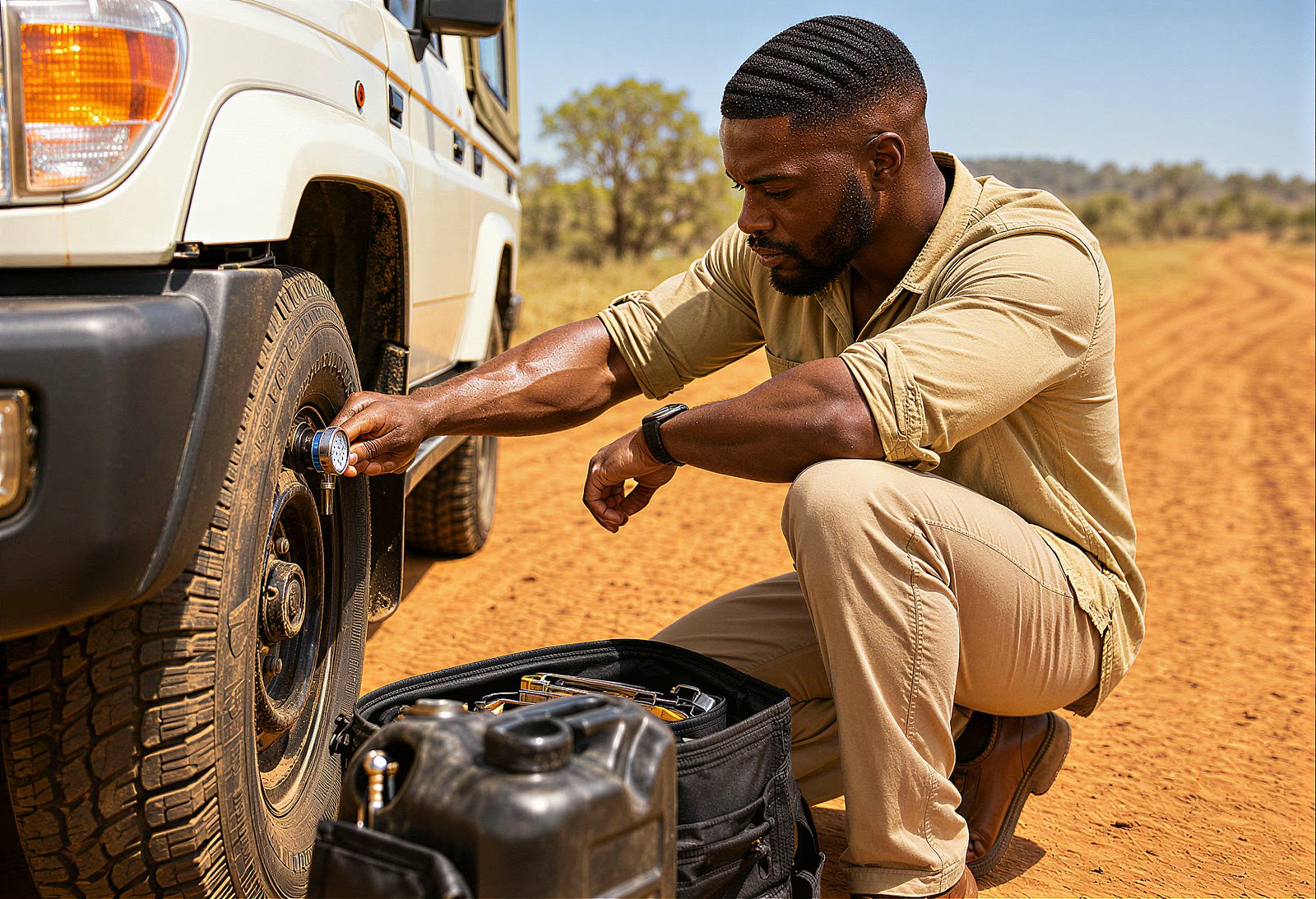
A safari quote breaks into five main lines: park or conservancy fees, the vehicle, the driver-guide, accommodation, and food plus transfers. At the Mara, a non-resident vehicle also pays a separate USD 40 levy per day, USD 20 in low season, on top of per-person entry. Check each line and the rate used before comparing headline numbers.
Park fees are the line to itemise first: at the Mara’s July rate of USD 200 a day, three reserve days cost USD 600 per adult before a bed, vehicle or meal. Camp choice and season move the total sharply: Governors’ Camp charges USD 998 a person in peak against USD 453 in April and May.


The vehicle and guide lines are fixed costs, not per-person costs. A Land Cruiser day rate of USD 250 with a professional driver-guide costs the same whether one traveller or six sit in the seats. That single fact explains most of the price difference between a shared safari and a private one.
Bookara’s quoted price excludes international flights, the Kenya eTA, travel insurance, drinks, tips and optional extras such as a balloon flight. Ask specifically what your quote leaves out, because a low per-day rate can depend on those exclusions.
Park and conservancy fees
A Mara entry ticket is a 12-hour ticket, 06:00 to 18:00, and does not carry over to the next day. Each driving day needs its own ticket, including a final morning drive before a 10:00 exit, which is the most common hidden cost in a Mara budget.
Vehicle and guide
Published 2026 Kenya vehicle hire: an eight-seat safari van at USD 150 per day and a seven-seat 4×4 Land Cruiser at USD 250 per day, both with driver-guide, and both excluding passenger park fees and accommodation. A separate quote for a 5- or 8-seater 4×4 with driver-guide lists USD 250 a day.
Accommodation and food
Camp rates move sharply by season: Governors’ Camp charges USD 453 per person in April and May against USD 998 in peak, and conservancy camp rates including the conservancy fee are quoted at USD 600 to 1,500+ per person per night. At the very top, the Ritz-Carlton Masai Mara Safari Camp opened on the Sand River in August 2025 from USD 3,500 a night.
Park fees versus conservancy fees: the line most quotes get wrong
Park fees are charged per person per day at a gate; conservancy fees are charged per person per night through the camp. They are different charges on different bases, and a conservancy itinerary that crosses into the national reserve pays both.
Note too that the Maasai Mara National Reserve is a county-run reserve, administered by Narok County, not a Kenya Wildlife Service national park. Its fee rules are set separately from Amboseli, Nakuru and Tsavo.
Source: Masai Mara Park Fees 2026: What Changed, What It Costs, and How to Plan for It, August 2026
Fees are revised by notice, so confirm the current rate with the operator and on the official pages: Kenya Wildlife Service for KWS parks and Mara Triangle for the Triangle (both checked November 2026).
KWS and reserve rates for East African residents and Kenyan citizens
Diaspora readers returning home should not accept the non-resident rate. The same reserve fee page lists resident child rates at Ksh 1,000 rising to 2,000 and citizen child rates at Ksh 300 rising to 500, while the separate 2026 schedule gives EAC resident child entry as KES 500 peak and KES 350 low season; confirm the band at booking.
Resident rates cover nationals and residents of Kenya, Uganda, Tanzania, Rwanda and Burundi, and you must show a National ID or a passport with a work permit or appropriate visa. Without valid proof you pay the non-resident rate at the gate. Operators report that resident-rate packages sold to non-residents are being checked and penalised at the gates (Touring Insights, August 2026).
Source: Masai Mara Reserve Entry Fees & Park Rules, 2026
Private conservancy fees per person per night
Mara conservancy bed-night fees are quoted at USD 70 to 130 at Naboisho, Olare Motorogi and Mara North (Trunk Trail Safaris, 2026), USD 80 to 120 for non-resident adults at several Mara conservancies (Masai Mara Reserve Entry Fees & Park Rules, 2026), USD 90 to 150 (Beyond the Plains Safaris, 2026/2027) and USD 100 to 150 (Trunk Trail Safaris, November 2026). Camp rates that already include the conservancy fee range from USD 380 to 630 per person per night at the Porini camps in Ol Kinyei, up to USD 500 to 2,500+ at Olare Motorogi.
What the premium buys is measurable. Olare Motorogi holds only 95 beds across eight camps, about one game vehicle per 2,100 acres. Conservancies permit off-road driving, night drives and walking safaris, all banned in the reserve, and cap vehicles at a sighting at around five against 30 or more in the reserve at peak.
Which one is better value for your trip
Source: Masai Mara Park Fees 2026: What Changed, What It Costs, and How to Plan for It, August 2026
On this comparison the conservancy premium is about USD 50 a day once the reserve fee is counted, and for that you get night drives, walking and five vehicles at a sighting instead of 30. The value leans conservative when you plan to spend days inside the reserve for the migration: conservancy vehicles can enter the reserve but pay the daily entry fee on top, and only guests staying in a conservancy may drive in it.
Season: the same seven days in July and in May
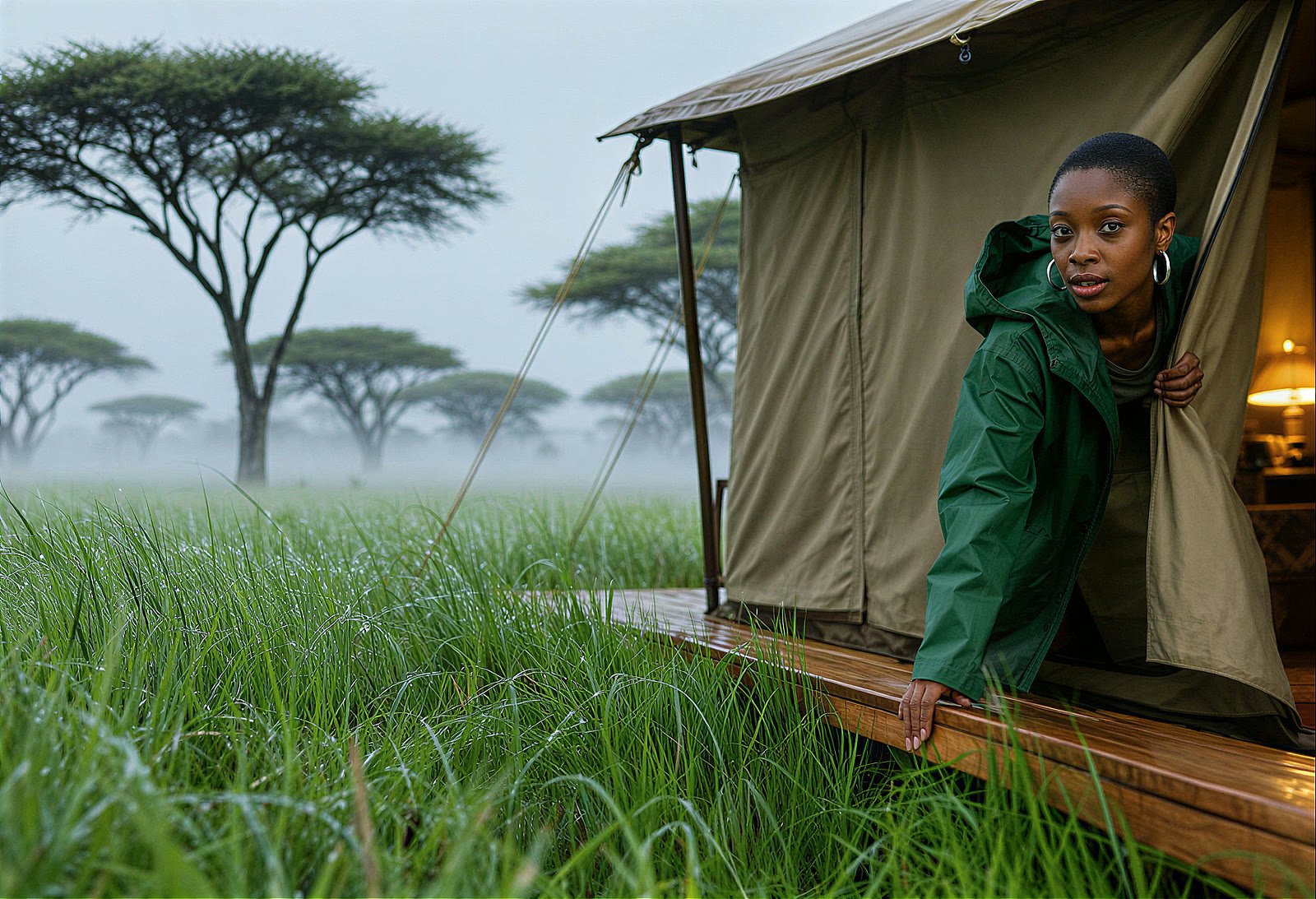
Season is the single biggest lever on a Kenya safari price, because it moves both the camp rate and, at the Mara, the park fee at the same time. Peak is July to October, when the migration crosses, plus a second spike from about 20 December to early January. See how Kara Travel works for more.
Same camp, same room: Governors’ Camp charges USD 998 per person per night from July to October and USD 453 in April and May. On top of that, the Mara entry fee halves from USD 200 to USD 100 in the first half of the year.
Source: Maasai Mara Travel Guide | BootsnAll, Updated October 4, 2026
Reported peak-to-shoulder savings on the same room category run 25 to 40%, and green-season to peak gaps at a single camp can exceed 40%. Bookara’s checked per-day floor is USD 188 (15 November 2026).
What the migration premium buys you
The Great Migration brings the herds across from the Serengeti between July and October, with the most reliable river crossings in August and September. River crossings are not scheduled; August and September give the best chance.
Travel in February instead and the herds are calving on the southern Serengeti plains in Tanzania, so the Mara is outside the migration window and rates are lower. What you gain is time in parks such as Amboseli, Tsavo and Samburu, where wildlife viewing does not depend on the migration.
Is travelling in the rains worth the saving?
Mostly yes, with conditions. April and May are the wettest period in the Mara, with long rains. The trade-offs are specific: some camps close for maintenance, roads soften, and a conservancy is the safer base because conservancies allow off-road driving when tracks are blocked.
How many people share the vehicle changes everything
The vehicle and guide cost the same for one passenger or six, so the per-person rate falls sharply as the group grows. That is arithmetic, not negotiation.
At the published USD 250 per day for a 4×4 with driver-guide: two people pay USD 125 each per day, four pay USD 62.50, and six pay about USD 42. Compare that with a shared 4×4 seat, which is charged the same for one traveller as for each of a pair.
The shared option in a camp vehicle is genuinely cheaper. Operators report that at four to six people, a private trip costs about the same as a shared one, and you set the pace.
Source: Safari Vehicle Hire in Kenya| 4×4 Land cruiser Hire in Kenya| Hire 4X4, 2026
The solo traveller’s real cost
A solo traveller carries a single supplement and most of a private vehicle. On fly-in itineraries there is a second penalty, because SafariLink charges single passengers the minimum two-passenger load before the flight operates.


The fix is a small-group departure or a shared seat. Ask in shoulder season whether a single supplement can be waived; lower occupancy makes waivers more likely. Families should request child rates early, because the age bands differ by source: the reserve fee page lists under-8s entering free, USD 50 a day for children aged 9 to 17 throughout 2026, while a second 2026 schedule gives USD 100 peak and USD 50 low season for ages 3 to 15, so confirm the band at booking.
Road or fly-in: what each adds to the bill
Road versus air is a straight trade of money against roughly five hours each way. Nairobi to the Mara is about 270 km and five to six hours by road, longer in the rains; the scheduled light aircraft from Wilson Airport lands at a Mara airstrip in 45 to 50 minutes.
A road-based Mara stay uses much of the first and last day travelling. For a quote that separates road and air costs, contact Kara Travel.
When flying is worth the premium
Flying is worth it on a short trip and not on a long one. Removing five hours each way changes a three- or four-day safari entirely, and barely registers on a twelve-day itinerary.
Flights from Wilson to Mara airstrips are published at USD 150 to 350 per person one way, with Governors Aviation quoting USD 250 one way and USD 420 to 434 return for 2026. Watch the bag: SafariLink allows 15 kg total per passenger including hand luggage and cameras, in a soft bag no larger than 60 x 45 x 30 cm. Excess is carried at the captain’s discretion at the prevailing rate, but you can pre-buy 10 kg, 20 kg or 30 kg bundles up to 48 hours before the flight. Check in at Wilson 60 minutes before departure.
Three worked budgets you can copy
Each of these is built from the same five lines, so you can swap a component and see the effect. All are per person sharing, and none includes international flights.
4 days, Mara by road, mid-range
Day 1: Nairobi to the Mara by road, five to six hours, arriving for an afternoon drive. Days 2 and 3: full days in the reserve. Day 4: morning drive on the fourth ticket day, exit by 10:00, drive back.
- Park fees, 4 ticket days at the low-season rate (afternoon arrival, two full days, final morning): USD 400
- Camp rate, three nights at Naboisho’s published low end: USD 350 a night = USD 1,050
- Private 4×4 with driver-guide, 4 days at USD 250 divided by two = USD 500 each
- Tipping at USD 25 to 40 a day: USD 100 to 160
- Total: roughly USD 2,050 to 2,110, about USD 513 to 528 a day
For comparison, Beyond the Plains lists a 3-day budget Mara safari at USD 500 to 700 per person all-in, with a shared vehicle, basic tented camp and full board (checked November 2026).
7 days, classic circuit, mid-range (shoulder-season, June rates)
Day 1: arrive Nairobi. Day 2: drive to Lake Naivasha, two and a half to three hours, afternoon boat or Crescent Island walk. Day 3: Naivasha to the Mara. Days 4 and 5: full Mara days. Day 6: Mara to Amboseli, a long transfer day. Day 7: Amboseli morning drive, then four to five hours back to Nairobi.
- Park fees: Mara 4 ticket days at USD 100 (day 3 entry, days 4 and 5 full, day 6 final morning) plus Amboseli 1 day at USD 90 = USD 490
- Private 4×4 with driver-guide for two, 6 days at USD 250 divided by two = USD 750 each
- Mid-range lodges, 6 nights at roughly USD 300 to 450 = USD 1,800 to 2,700
- Total: roughly USD 3,040 to 3,940, about USD 434 to 563 a day
Compare this shoulder-season rebuild only with another shoulder-season quote; a peak July or August version carries higher camp rates and the USD 200 Mara fee.
10 days, fly-in, high season, luxury
Day 1: arrive Nairobi, overnight. Day 2: fly Wilson to a Mara conservancy, 45 to 50 minutes. Days 3 to 5: conservancy game drives, night drive and walking safari. Day 6: fly to Samburu, 55 to 70 minutes. Days 7 and 8: Samburu drives. Day 9: fly to Amboseli, 30 to 45 minutes. Day 10: Amboseli morning, fly to Wilson, connect home.
- Conservancy camp, 4 nights: USD 650 a night mid-range = USD 2,600; USD 1,500 a night luxury = USD 6,000
- Samburu lodge, 3 nights: USD 600 a night mid-range = USD 1,800; USD 900 a night luxury = USD 2,700
- Amboseli lodge, 1 night: USD 600 mid-range; USD 900 luxury
- Nairobi hotel, 1 night: live city-hotel quote; not included in the totals below
- Samburu entry, 2 days at USD 70 = USD 140
- Amboseli entry, 1 day at USD 90 = USD 90
- Internal flights, 3 sectors at USD 150 to 350 = USD 450 to 1,050
- Balloon flight, USD 450 to 650
- Tips, 5 to 10% of the safari total
- Mid-range total, before the Nairobi hotel: about USD 6,450 to 7,620
- Luxury total, before the Nairobi hotel: about USD 11,250 to 12,700
What sits outside the safari price
International flights are almost always separate. Published return fares to Nairobi from the US east coast, the UK and Accra could not be confirmed from the sources here, so treat them as a live quote rather than a budget line. Ghana-based travellers usually connect through Nairobi, Addis Ababa or Doha rather than flying direct.
On the eTA, the rules depend on your passport, not your residence. UK and US passport holders need an approved eTA before travel, as do infants and children. Ghana is on Kenya’s 90-day exemption list, Nigeria on the 60-day list, and citizens of Burundi, DR Congo, Rwanda, South Sudan, Tanzania and Uganda are exempt for 180 days. Processing is typically three working days, so apply well before the flight and carry a passport valid six months beyond arrival with a blank page.
Insurance and tips
UK FCDO guidance is that insurance must cover the itinerary, the planned activities and emergency expenses, not just general medical cover. That matters for balloon flights and walking safaris, which some standard policies exclude. Emergency air evacuation cover through AMREF Flying Doctors is quoted separately at USD 10 per person.
Tipping is customary, not compulsory, and should be budgeted as a cash line. Guide or driver tips run USD 10 to 20 per person per day on a group safari, or USD 40 to 50 per vehicle per day on a private one. Budget USD 25 to 40 per person per day in cash for tips and incidentals, or roughly 5 to 10% of the total safari cost, and give it at the end rather than daily.
Optional extras worth budgeting for
- Hot-air balloon over the Mara: USD 450 to 650 per person shared, USD 800 to 1,200 for a private basket section, plus a USD 50 landing fee usually already inside the flight price. The Mara reserve entry is still payable on balloon day even if you sleep in a conservancy.
- Maasai village visit: about USD 40 per person.
- Night drives and walking safaris: usually bundled in a conservancy rate, chargeable elsewhere.
- Spa, premium drinks and laundry: outside almost every quoted rate.
How to tell whether a quote is fair
A fair quote names every line: the exact park or conservancy fee and the rate it was calculated at, the vehicle basis, the camp by name, and the single supplement. Send these questions before you pay a deposit.
- Which park and conservancy fees are included, at which rate, and for how many days? Verify
- Is the vehicle private, and how many passengers per vehicle? Verify
- Which camps, by exact name, and are they inside the reserve, in a conservancy, or outside the gate? Verify
- Is the conservancy bed-night fee bundled into the nightly rate? Verify
- What is the single supplement, as a percentage of the shared rate? Verify
- Are internal flights, airport transfers and the Wilson transfer included? Verify
- What is the departure-day exit time, and does it trigger another day of park fees? Verify
- Are drinks, tips and the balloon flight in or out? Verify
Red flags in a cheap quote
A per-day rate far below the market usually means one of four things: a shared vehicle sold as private, a camp outside the park gate with a long daily commute, park fees excluded, or a package promising full-day game drives from outside the boundary that will run into the 12-hour ticket rule. A very cheap "all-inclusive" peak-season quote in August is a red flag on its own.
Ask for the exact camp and check where it sits: a camp outside the reserve boundary may still need a long drive to reach the crossing zones, and conservancy camps include off-road and night drives that reserve camps do not.
One practical note for Mara bookings: the November 2026 park-fees source says payment runs through eCitizen before you reach the gate, with no on-site option, while the reserve fee page checked November 2026 still lists cash in USD or shillings at the Mara gates except the Mara Triangle, which is card or M-Pesa only. Expect eCitizen pre-payment and carry a card or M-Pesa as backup; save the QR code confirmation for rangers to scan.
What this means for you
Set your dates first, then your budget. The same seven Mara nights cost roughly USD 998 a night in July and USD 453 in May at the same camp, and the entry fee halves in the first half of the year. No amount of negotiating beats choosing a different month.
When your dates are fixed, pick your window first, then price the safari around it. For more on Kara Travel.
Sources
- Masai Mara Reserve Entry Fees & Park Rules
- Kenya Wildlife Service, checked November 2026
- Mara Triangle, checked November 2026
- Masai Mara Park Fees 2026: What Changed, What It Costs, and How to Plan for It
- Masai Mara Conservancy Fee: What It Includes
- Masai Mara Hot Air Balloon Price
- Best Masai Mara Conservancies 2026: Expert Guide & Fees
- Masai Mara Safari Cost 2026: No-Surprise Breakdown
- Maasai Mara Travel Guide | BootsnAll
- Plan a Maasai Mara Safari: Travel & Booking Guide
- Masai Mara Safari Packages 2026/2027 | Beyond the Plains Safaris
- Kenya Safari Cost: Budget to Luxury Prices (2026) | Roar Safaris
- Kenya’s Shoulder Season | Touring Insights
- Bookara safari price index
- Safari Vehicle Hire in Kenya
- 4×4 Vehicle with driver guide | Excel Getaways
- Kenya Safari Tipping Guide 2026
- Safari Tipping Africa 2026
- Safarilink Terms and Conditions
- Kenya eTA official portal
- GOV.UK — Foreign travel advice: Kenya
- Masai Mara Private Conservancies Guide 2026
- Ultimate Guide to the Masai Mara 2026/2027 | Brilliant Africa
Frequently asked questions
How much does a Kenya safari cost per person per day?
The clearest evidenced floor is Bookara’s USD 188 per person per day, checked 15 November 2026, including park fees, lodges, meals, vehicle, guide, pickup and taxes. At the Mara, a mid-range reserve camp at USD 400 per person per night plus USD 200 a day in fees gives around USD 600 per person per day, while a fee-inclusive conservancy camp at USD 650 per person per night sits at USD 650 per person per day. Bookara’s figure excludes international flights, the Kenya eTA, insurance, drinks, tips and optional extras such as a balloon. At the Mara in July, the USD 200 daily entry fee alone sets a floor under the per-day figure.
How much does a 7-day Kenya safari cost?
A rebuilt budget of a 7-day Mara, Naivasha and Amboseli circuit, using USD 250 a day for a private 4×4 for two and mid-range lodges, lands at about USD 3,040 to 3,940 each. The season, more than the itinerary, sets which end of that range you land on.
Do Kenyan citizens and residents pay less in park fees?
Yes. That compares with USD 100 and USD 200 for non-resident adults. You must show a National ID or a passport with a work permit or appropriate visa, and diaspora visitors are often quoted the non-resident rate by mistake.
Are park fees included in safari package prices?
Often, but never assume it. Most Mara safari packages include the entry fee, while fly-in safaris are the exception and usually require the fee on landing. The conservancy bed-night fee is normally bundled into the camp rate, but a conservancy vehicle entering the national reserve pays the daily reserve fee on top. Ask for the fees to be itemised in writing with the rate used.
How many days is enough for a Kenya safari?
Three nights in the Mara is the practical minimum because the reserve is a five to six hour drive from Nairobi, and a road trip uses most of the first and last day travelling. Five days lets you add Lake Naivasha or Amboseli, and seven to ten days suits a two- or three-park circuit without feeling rushed. On the migration, a longer stay raises the chance of a river crossing, since herds can leave an area within days.