
A 7-day Morocco itinerary buys you one route, not two: either Marrakech, the High Atlas and the Sahara, or Marrakech, Fes and Chefchaouen by rail. Ten days buys the one-way grand tour between Marrakech and Fes through the dunes — and the transfer times below explain why those extra three days matter more than the extra city.
Key takeaways
- 7 days = one shape: the southern one-way (Marrakech to Fes via the dunes) or the rail route.
- 10 days = Marrakech in, Erg Chebbi in the middle, Fes out, with no backtracking.
- The leg that breaks every short plan is Merzouga to Fes: 470 km and 7 to 8 hours by road.
- Prime months are March to May and September to November, when camps price 15 to 25% above shoulder months; book private tours 4 to 5 months ahead.
- Fly open-jaw into Marrakech Menara and out of Fes–Saïss for a one-way route.
Source: Best Morocco Road Trip Itinerary (10-Day Route), October 2026
9–10 hours: Marrakech to the Sahara drive time (Morocco Luxury Desert Camp Cost Per Night: What to Budget in 2026)
How to choose the right Morocco itinerary for your days
Choose by shape, not by city count. Morocco gives you three route shapes, and the number of days you have decides which one you can actually finish.
The southern loop is Marrakech, over the Tizi n’Tichka pass to Ait Ben Haddou and Ouarzazate, east through the Dades and Todra valleys to the dunes at Erg Chebbi, then back to Marrakech; drop that return leg and it becomes the southern one-way, Marrakech to Fes via the dunes. The rail route is Marrakech, Fes and Chefchaouen. The one-way grand tour joins them — Marrakech in, the Sahara in the middle, Fes out, no backtracking.
The honest rule: 7 days buys one shape, either the southern one-way or the rail route. 10 days buys the one-way grand tour, which road-trip operators describe as the comfortable minimum for the classic Marrakech-to-Fes loop. Around 14 days is the first length where a loop stops feeling like a coach trip.
That geometry is why the "triangle" costs you a day. Erg Chebbi sits about 550 km from Marrakech on paved road, a 9 to 10 hour drive (Serenity Morocco Tours), and Fes is a further 470 km north of the dunes. The route described here reaches Merzouga by road.
Fly open-jaw where you can. Royal Air Maroc was showing round-trip economy fares of USD 967.79 from Washington Dulles into Fez and USD 1,002.99 from New York JFK into Marrakech when the fares were checked on 11 November 2026, and the airline states that fares are collected within 48 hours and may not be available — treat them as indicative, not fixed (Royal Air Maroc).


On the ground, ask for the vehicle and driver details in writing before you pay a deposit.
When to go and what to book before you fly
Go in March to May or September to November: those are the prime desert seasons, and camps price them 15 to 25% above shoulder months. July and August push past 40°C in Marrakech and again over 40°C through the Dades, Todra and Merzouga — and walking with luggage in that heat is unrealistic, so plan arrivals for the evening. December and January can bring desert nights down to 2°C, days are short with sunset around 17:00 to 18:00, and December to February can bring snow and temporary closures on the Tizi n’Tichka. In winter, operators recommend two desert nights rather than one.
Ramadan moves the timetable. Ramadan 2027 is expected from about 8 February to 9 March, with Eid al-Fitr around 9 or 10 March, confirmed by moon sighting the evening before — Morocco often starts a day after the Gulf, so build a buffer around both ends. In Marrakech and Fes many medina cafés and snack places close by day, monuments can close earlier, and trains and CTM buses run to adjusted schedules; streets empty and taxis become scarce just before sunset, and roads are hectic in the hour before iftar. Tourist, hotel and most riad restaurants stay open for lunch, and almost everything shuts on Eid morning (Clever Tourists; Morocco Guide).
Book ahead for the desert and for guides. Private tours should be booked 4 to 5 months out; peak-season rates run 15 to 25% above shoulder months; Christmas and New Year camps add a 30 to 50% surcharge and a two-night minimum, and popular camps sell out for New Year’s Eve by September. Book Jardin Majorelle tickets online — the garden caps visitor numbers — and confirm the nearest road access point for any riad inside the Marrakech medina, because no vehicle reaches the door. If your dates sit near Ramadan or the New Year, get in touch before booking flights.
Entry rules depend on your passport, so check them on the official channels for your nationality rather than a blog: the UK FCDO’s Morocco travel advice was reviewed in full in August 2026 with new passport information added. Royal Air Maroc states that French passport holders get 90 visa-free days; that tells you nothing about UK, US or Ghanaian passports.
- Riad in Marrakech and Fes, with a road meeting point confirmed Book
- Erg Chebbi camp for your desert night Book by September for Christmas or New Year
- Rail seats on ONCF for your travel month Check oncf.ma
- Entry rules for your own passport Verify with the consulate and official channels
- Jardin Majorelle tickets on the official site Book
- Travel insurance covering your itinerary and activities Confirm
Pack for two climates: a warm layer for desert nights (November to March is genuinely cold after sunset), shoes that survive uneven medina lanes, and small dirham notes for taxis — the dirham is a closed currency, so you get it inside Morocco rather than before departure.
Morocco itinerary 7 days: Marrakech, the High Atlas and the Sahara
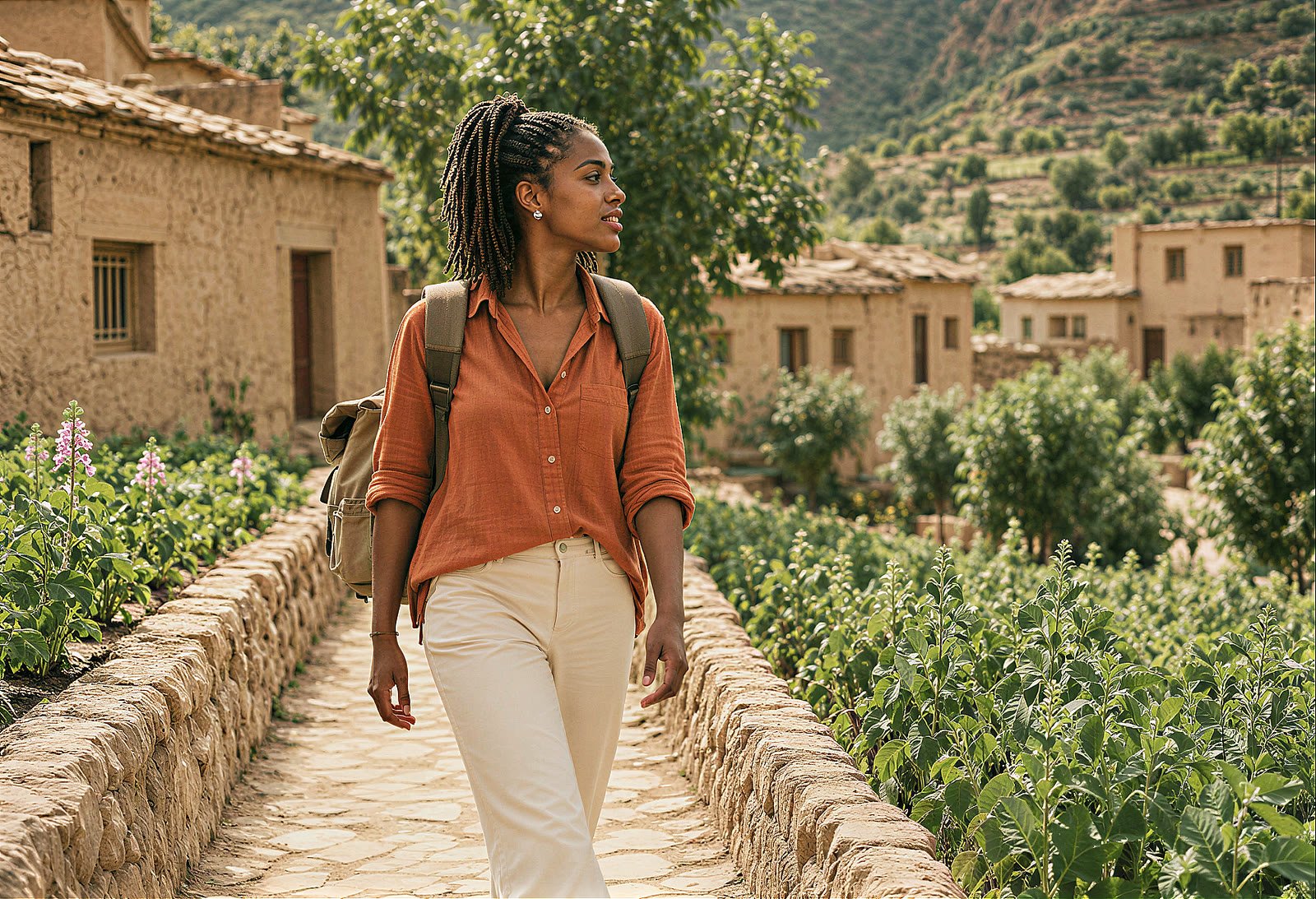
This is the southern one-way (Marrakech to Fes via the dunes), the 7-day version to take on a first visit: Marrakech in, one full Marrakech day, the Atlas crossing, the Dades and Todra valleys, a night in Erg Chebbi, then out of Fes. It works — but it is a driving itinerary with sightseeing attached.
Day 1 to 2: Marrakech
Land at Marrakech Menara, which sits 4 to 6 km from the centre and takes 15 to 40 minutes to reach by road. Use the official prepaid taxi counter inside arrivals and keep the ticket for the whole ride; daytime fares to the medina or Gueliz are quoted from about 70 to 160 MAD per vehicle depending on the source, and the night tariff adds roughly 50% (Marrakech Airport Guide; Marrakech Taxi Driver). The Alsa Bus 19 is about 30 MAD.


Day 2 is Marrakech. Start at Jardin Majorelle in Gueliz, 15 to 20 minutes from the medina, at 08:00 before the queue builds; the garden caps visitor numbers, so book tickets online in advance, and 60 to 90 minutes covers both. Then the Bahia Palace, the 14th-century Ben Youssef Madrasa and the souks, and an evening on Jemaa el-Fnaa.
Day 3: over the Tizi n’Tichka to Ait Benhaddou
Marrakech to Ait Benhaddou and Ouarzazate is 204 km and 3.5 to 4 hours over the pass, which tops 2,200 m with sharp switchbacks, slow trucks and livestock. Coaches take about 4½ to 5 hours. Ait Benhaddou’s ksar is 30 km west of Ouarzazate and a taxi there costs 150 to 200 MAD; give it hours — four families still live inside the walls without electricity (That Travelista).
Day 4 to 5: Todra, Dades and Erg Chebbi
Ouarzazate to the Dades Valley is 67 km and about 1.5 hours; Dades through Todra to Merzouga is 220 km and 4 to 5 hours. Do not plan to arrive after dark — unlit trucks and animals on the road make night driving best avoided. At Erg Chebbi you get Morocco’s tallest dunes at roughly 150 m, a camel transfer of 30 to 45 minutes into camp, and the sunset ride that is often billed separately at €15 to €30 per person.
Day 6 to 7: the Merzouga–Fes leg and out
Merzouga to Fes is 470 km and 7 to 8 hours through the Ziz Valley and the Middle Atlas — the hardest driving day on the route. If you can, split it with an overnight at Midelt or Azrou. Day 7 is the Fes medina in the morning, then Fes–Saïss airport.
If you already hold a return ticket to Marrakech, run the southern loop instead — back to Marrakech rather than out of Fes — and skip Merzouga. Go no further than Ouarzazate or Zagora — where camps run €50 to €120 per person per night — and spend the saved day in Essaouira.
The other 7 days: Marrakech, Fes and Chefchaouen by train
If you would rather not spend three days in a car, this is the rail version: Marrakech, Fes and Chefchaouen, no desert. Days 1 and 2 are Marrakech; day 3 is the train north; day 4 is the Fes medina; day 5 is the road to Chefchaouen; day 6 is Chefchaouen; day 7 is back to Fes, Tangier or Casablanca to fly home.
Be clear about what the rail network does. The train is more comfortable and cheaper than the grand taxi where it exists, and timetables and fares should be checked on oncf.ma for your travel month. If you fly into Casablanca instead, the airport train to Casa Voyageurs costs about 35 MAD and beats a 200 to 350 MAD taxi.
Fes to Chefchaouen is 200 km and 3.5 to 4 hours by road, and a grand taxi for all six seats is quoted at 444 MAD one way. Check CTM and Supratours timetables the week you travel.
This version suits travellers with luggage, families, anyone moving in July or August, and anyone who would rather have two full days in Fes than a night in a tent.
Morocco itinerary 10 days: the full Marrakech–Sahara–Fes route
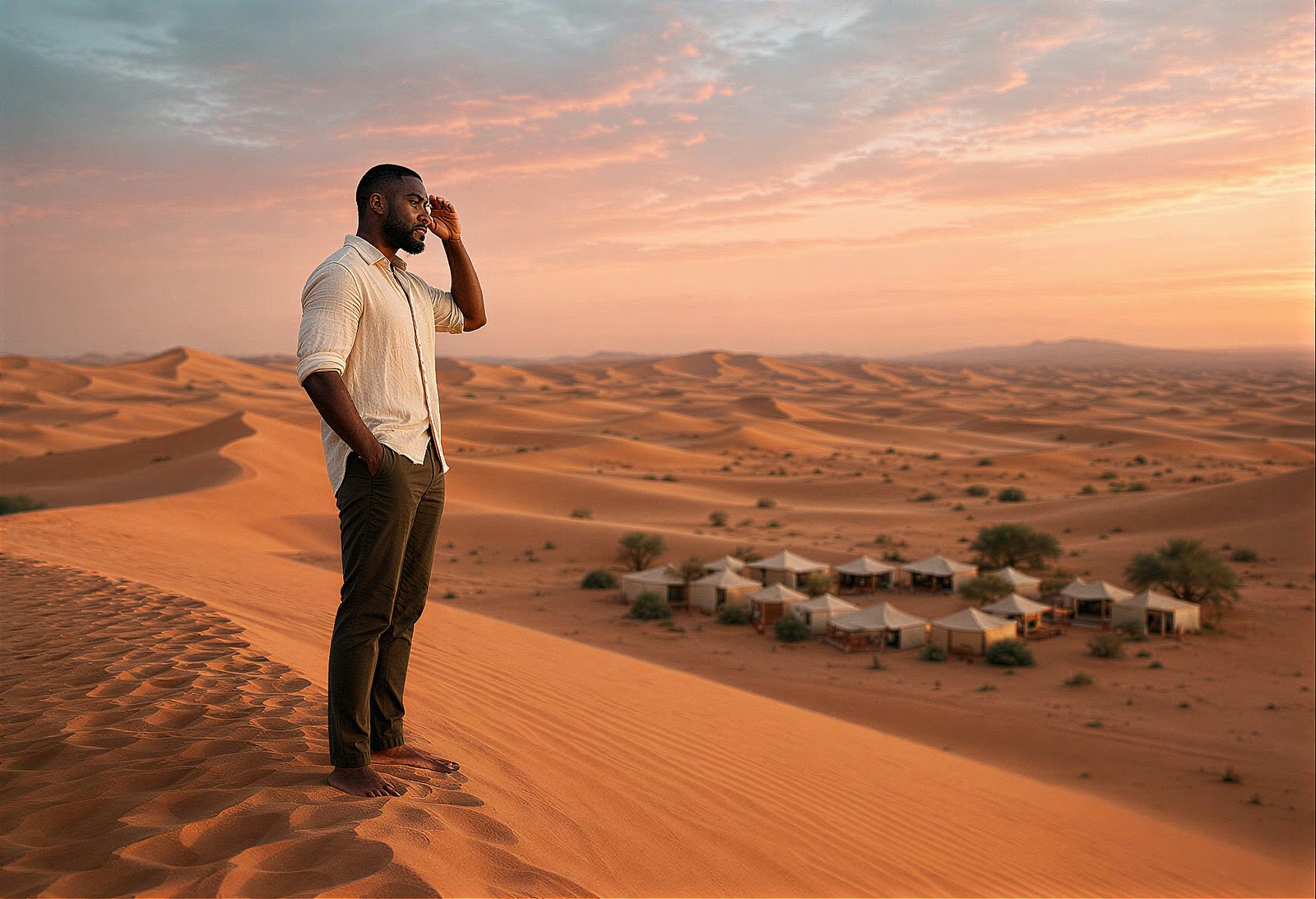
Ten days is the shortest length at which the grand tour stops being a forced march: Marrakech, the Atlas, the desert and Fes in sequence.
- Day 1: arrive Marrakech. Day 2: Marrakech properly.
- Day 3: Marrakech to Ait Benhaddou and Ouarzazate (204 km, 3.5 to 4 hours).
- Day 4: on to the Dades Valley (67 km, 1.5 hours).
- Day 5: Dades and Todra to Merzouga (220 km, 4 to 5 hours).
- Day 6: full Erg Chebbi day and a desert camp night.
- Day 7: Merzouga to Fes (470 km, 7 to 8 hours).
- Day 8: Fes.
- Day 9: Fes, with a Volubilis and Meknes day trip.
- Day 10: fly out of Fes.
The extra three days over the 7-day route are not spent on new places. They remove the two worst days: the Marrakech-to-Dades sprint and the single-night desert. If you want a swap that improves it further, drop one Marrakech night for Essaouira, or drop the Volubilis day for a second desert night — check Volubilis opening hours on the day rather than trusting a printed plan.
One warning stands. This route still contains one genuinely long transfer, Merzouga to Fes.
Real transfer times between Marrakech, Fes and the desert
The road times below are the ones to plan around, drawn from a 10-day road-trip itinerary and the grand taxi route table.
| Leg | Mode | Distance | Typical time | Where the time goes |
|---|---|---|---|---|
| Marrakech → Ait Benhaddou → Ouarzazate | Car or coach | 204 km | 3.5 to 4 hours (coach 4½ to 5) | Tizi n’Tichka switchbacks above 2,200 m, slow trucks, photo stops |
| Ouarzazate → Dades Valley | Car | 67 km | 1.5 hours | — |
| Dades → Todra → Merzouga | Car | 220 km | 4 to 5 hours | Never after dark |
| Marrakech → Erg Chebbi direct | Bus or car | about 550 km | 9 to 10 hours by car, 10 hours by bus | The entire day; this is why Agafay exists |
| Merzouga → Fes | Car or grand taxi | 470 km (466 km in the taxi table) | 7 to 8 hours | Ziz Valley and Middle Atlas; split it at Midelt or Azrou |
| Fes → Chefchaouen | Car or grand taxi | 200 km | 3.5 to 4 hours | Road leg in this itinerary |
| Ouarzazate → Ait Benhaddou | Taxi | 30 km | Short hop | 150 to 200 MAD per taxi |
Source: Best Morocco Road Trip Itinerary (10-Day Route), October 2026
By train, check oncf.ma for the travel month before you build a day around a departure. The train is more comfortable and cheaper than the grand taxi where it exists.
By air, factor the airport time at both ends and a baggage allowance that shrinks on domestic and Europe–Morocco economy fares — Royal Air Maroc’s US–Africa economy allowance is 1 to 2 pieces of 23 kg, no single bag may exceed 32 kg or 203 cm total, and Eco Essential fares on short and medium haul include no checked bag (Royal Air Maroc baggage).
Source: Taking taxis in Morocco – Guide to Grand Taxi and Petit Taxi, August 2026
Never book a fixed-time tour on a transfer day
Buffers matter most on the Atlas crossing and the Merzouga–Fes leg. Google-style estimates ignore switchbacks, photo stops and slow trucks, and night driving on mountain and desert roads is the one risk experienced road-trippers agree on.
What to cut when you have 4, 5 or 12+ days
Cut by shape: under a week, a loop becomes a driving marathon.
4 days: Marrakech only, with one Atlas day trip to Imlil or the Ourika Valley. No desert, no Fes — the transfers would eat the trip.
5 days: Marrakech plus Essaouira, or Marrakech plus a Zagora desert night. Zagora’s Draa Valley is the most affordable dune option at €50 to €120 per person per night. Agafay, a rocky plateau 30 km from Marrakech and under an hour from the medina, is the other short-desert shortcut — though it is not the Sahara.
7 days: pick one shape, desert or rail route, never both. A one-week loop is a driving marathon.
12 to 14 days: add Essaouira, Rabat, Meknes and Volubilis, and give Fes a third night rather than another city. The classic loop runs roughly 1,100 to 1,300 km depending on stops.
Skip outright on a first trip: Tangier if you are flying into Marrakech, a second desert camp, and any "three cities in one day" tour.
What does a desert camp and driver cost?
Build a rough per-day figure from the parts: a mid-range to standard luxury Merzouga camp at €80–€200 per person per night, a car with private driver at $90–$150 a day split across the party, the local accommodation tax at €1–€3 per person per night, plus the sunset camel ride at €15–€30 per person and a 4×4 transfer at €10–€20 per person. Camp quotes are per person.
- Merzouga (Erg Chebbi) mid-range glamping€80–€130 per person per night
- Standard luxury€130–€200 per person per night
- Premium luxury€200–€300 per person per night
- Zagora, budget to mid-range€50–€120 per person per night
- Erg Chigaga, premium€200–€350+ per person per night
- Sunset camel ride, often billed separately€15–€30 per person
- 4×4 or camel transfer to a deep-dune camp€10–€20 per person
- Local accommodation tax€1–€3 per person per night
Source: Morocco Luxury Desert Camp Cost Per Night: What to Budget in 2026, November 2026
Beyond the camp, a car with private driver runs $90 to $150 a day. Solo travellers pay a 50 to 80% single supplement at camps, which price on double occupancy. In town, a petit taxi ride is typically 10 to 35 MAD with a 7 MAD minimum and a meter that is required by law, a grand taxi seat inside Marrakech is about 5 DH, and an airport-to-medina petit taxi is quoted at 150 MAD by day and 200 MAD after 20:00 by one source — the night surcharge of roughly 50% is a regulated tariff, not a scam. Compare current riad rates when you book rather than planning around a published figure.
Is Morocco safe for travellers?
The FCDO’s safety and security pages, reviewed in August 2026, and the US State Department’s Morocco page are the sources for the current risk picture: night driving on mountain and desert roads, and summer heat, are the practical risks. Make sure the petit taxi meter is running before you leave; if it is not started, negotiate a fare before you go, then take the next taxi if the driver refuses, carry small notes so nobody rounds up for lack of change, and keep a photocopy of your passport page separate from the original. UK travellers should read the FCDO’s safety and security pages rather than a blog.
What are the mistakes that wreck a Morocco trip?
The trip-wreckers are a return flight plus Fes, one rushed desert night, night driving, arriving in Fes during Ramadan unprepared, and paying without written details.
- Booking a return flight to Marrakech and then adding Fes. The Fes–Marrakech desert route involves 17 to 18 hours of driving in total.
- One night in the desert after a long drive. One Sahara night is rushed; two is the winter recommendation.
- Driving the Tizi n’Tichka after dark. Snow can close the pass between December and February, and unlit trucks and animals on the road make night driving the worst idea on the route.
- Arriving in Fes during Ramadan without checking hours. Medina cafés shut by day, monuments close earlier, and the hour before iftar is the worst time to schedule a transfer.
- Paying an agency that will not put the vehicle and driver details in writing. Ask too whether the camel ride, the 4×4 transfer and the local tax are inside the quoted rate.
A good outcome looks like this: one desert night you remember in the dunes, and no day where you arrive after dark having seen nothing. Before you book a single flight, write down your arrival airport, your departure airport and the one place you refuse to miss, then check that combination against the transfer table above. Start with how we check prices, opening times and visa rules before you commit a deposit.
Sources
- GOV.UK — Foreign travel advice: Morocco
- ONCF — Moroccan Railways
- ONDA — Office National Des Aéroports
- Accès Maroc
- Visit Morocco — Moroccan National Tourist Office
- Best Morocco Road Trip Itinerary (10-Day Route)
- Morocco desert tour — what to know before you visit in 2027
- Morocco Luxury Desert Camp Cost Per Night: What to Budget in 2026
- Jardin Majorelle Marrakech: Complete 2026 Visitor Guide
- Ait Ben Haddou Travel Guide
- Taking taxis in Morocco — Guide to Grand Taxi and Petit Taxi
- Marrakech Airport to City Centre: Transfer Guide 2026
- Marrakech Airport Taxi: Fixed Fares & Night Rates 2026
- Morocco Taxi Guide 2026: Fares, Uber & Night Rates
- Do Marrakech Taxis Take Card?
- Marrakech Airport Taxi Prices Guide
- Taking taxi in Morocco: a survival guide
- Best Merzouga Desert Camps 2026
- Visiting Morocco During Ramadan 2027: Dates and Tips
- Morocco Public Holidays & Ramadan Dates 2026–2027
- Royal Air Maroc — fares
- Royal Air Maroc — checked baggage allowance
- Rough Guides — 7 day Morocco itinerary
Frequently asked questions
Is 7 days enough for Morocco?
Yes, for one route. Seven days covers either the southern one-way (Marrakech, the Tizi n’Tichka, the Dades and Todra valleys, one night at Erg Chebbi, out of Fes) or the rail-led Marrakech, Fes and Chefchaouen route. It does not cover both, because Merzouga to Fes alone is 470 km and 7 to 8 hours.
How long is the drive from Marrakech to Merzouga?
About 9 to 10 hours by car over roughly 550 km of paved road, or about 10 hours by bus to the foot of Erg Chebbi. That is why the journey can be broken at Ait Benhaddou or Ouarzazate, then the Dades Valley, rather than driving it in one go.
Is there a direct train from Marrakech to Fes?
Check oncf.ma for your travel month: the train is more comfortable and cheaper than the grand taxi where it exists.
Should I fly into Marrakech and out of Fes?
Usually yes. An open-jaw ticket into Marrakech Menara and out of Fes–Saïss makes a one-way route possible. Confirm the vehicle and driver details in writing before you pay a deposit.
Zagora or Merzouga for a short trip?
Zagora if you have 5 days or a return ticket to Marrakech: its Draa Valley camps are the most affordable dune option at €50 to €120 per person per night. Merzouga’s Erg Chebbi if you are heading on to Fes, Rabat or Meknes — it has the tallest dunes in Morocco, up to roughly 150 m.