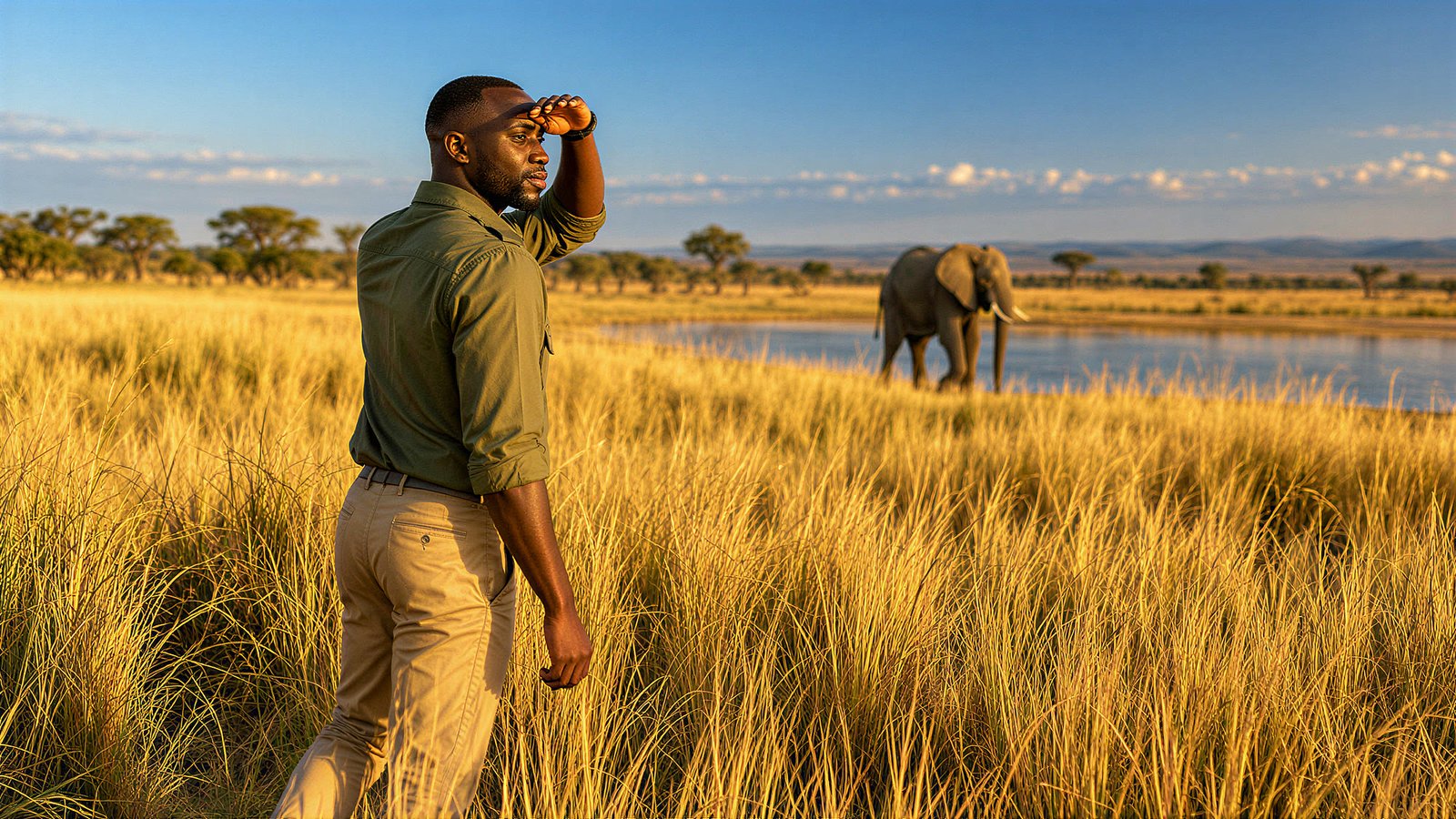
Mole National Park is Ghana’s largest protected area, a Guinea savannah park in the Savannah Region near Damongo, and a workable first safari takes two nights: fly Accra–Tamale then drive 2.5–3 hours, or drive 10–12 hours from Accra. The 2025 tariff published on the park information site, checked November 2026, lists GHS 30 for Ghanaian adults and GHS 60 for non-nationals, with walking safaris and game drives charged separately.
Mole rewards planning because the last leg is long, activities run at fixed times and the best wildlife window is short. This guide separates confirmed park fees from operator estimates and tells you what to book before you fly.
Key takeaways
- Two nights is the minimum; three days lets you add Larabanga and a second activity without rushing.
- Fly to Tamale for a short trip; drive from Accra only if you can give 10–12 hours each way and stop overnight.
- Go in the dry months for waterhole viewing; December–February is cooler but hazy, while March–April can approach 40°C.
- A guide is compulsory inside the park; activities are arranged at the Information Centre.
Source: Forestry Commission; World Bank; Ecology and Evolution, 2019–2024
Before you start: documents, cash and bookings
Before you start, you need a passport that meets Ghana’s entry rules, a yellow fever certificate, cedi cash and a bed and safari slot booked ahead where possible. The people part is your Ghanaian host if you use a visa on arrival, and the lodge if you need a transfer.
- Passport and visa or visa-on-arrival approval Confirm
- Yellow fever certificate and Ghana Health Declaration Carry
- Cedi cash for published gate fees Confirm locally
- Lodge booking and safari slot Confirm in writing
Mole National Park at a glance: where it is and what to expect
Mole National Park sits in the Savannah Region near Damongo, about 170 km west of Tamale by one operator guide and roughly 730 km north of Accra. The Forestry Commission dates it to 1958 as a wildlife refuge and 1971 as a national park, and the World Bank calls it Ghana’s largest protected area and most important elephant habitat.
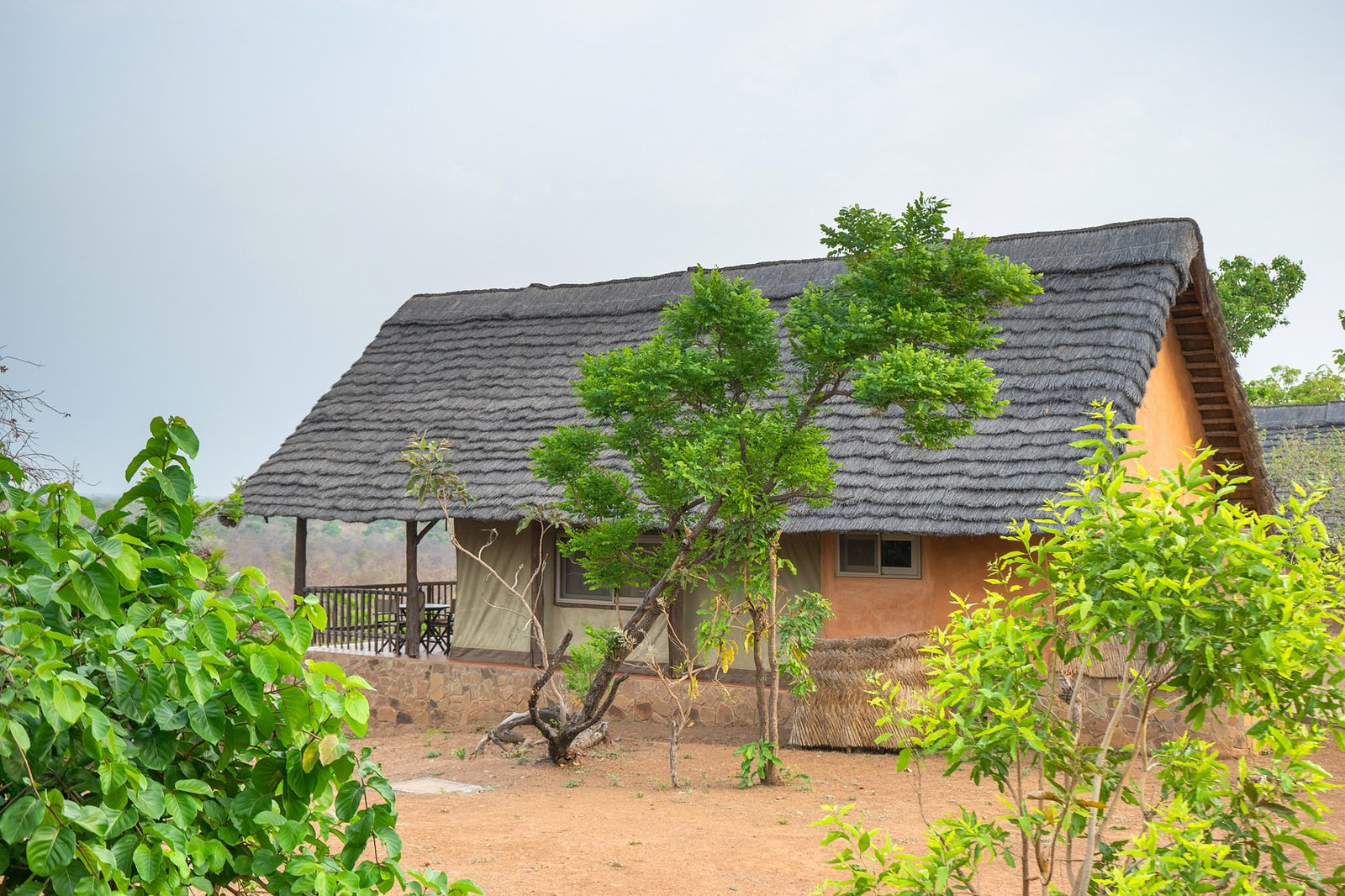
The landscape is Guinea savannah with gallery forest along the Mole and Lovi rivers and a sandstone escarpment on the southern boundary. Most streams dry out, leaving about 21 waterholes in the dry season, which is why wildlife viewing concentrates near water. The visitor setup is simple: report to the Information Centre, take a guided walking safari or game drive, and sleep at Mole Motel or Zaina Lodge.

Why the park area differs
Published figures include 4,577 km² and 4,840 km² on the Forestry Commission page, 4,600 km² from the World Bank, about 4,850 km² in a peer-reviewed study and 4,857 km² in a park guide. Treat the area as roughly 4,600–4,860 km² rather than quoting one figure as exact.
Mole is not a Big Five guarantee. The Forestry Commission lists lion, leopard and hyena, but leopards are rarely seen and one travel guide says lions are only rumoured, with the last recorded sighting in August 2004. Come for elephants, kob, waterbuck, birds and space.
Mole suits wildlife-first travellers, birders, photographers and slow road-trippers. It is not a beach or nightlife add-on, and it is not a place to arrive without a booking in peak December.
How to get to Mole National Park: fly to Tamale or drive from Accra
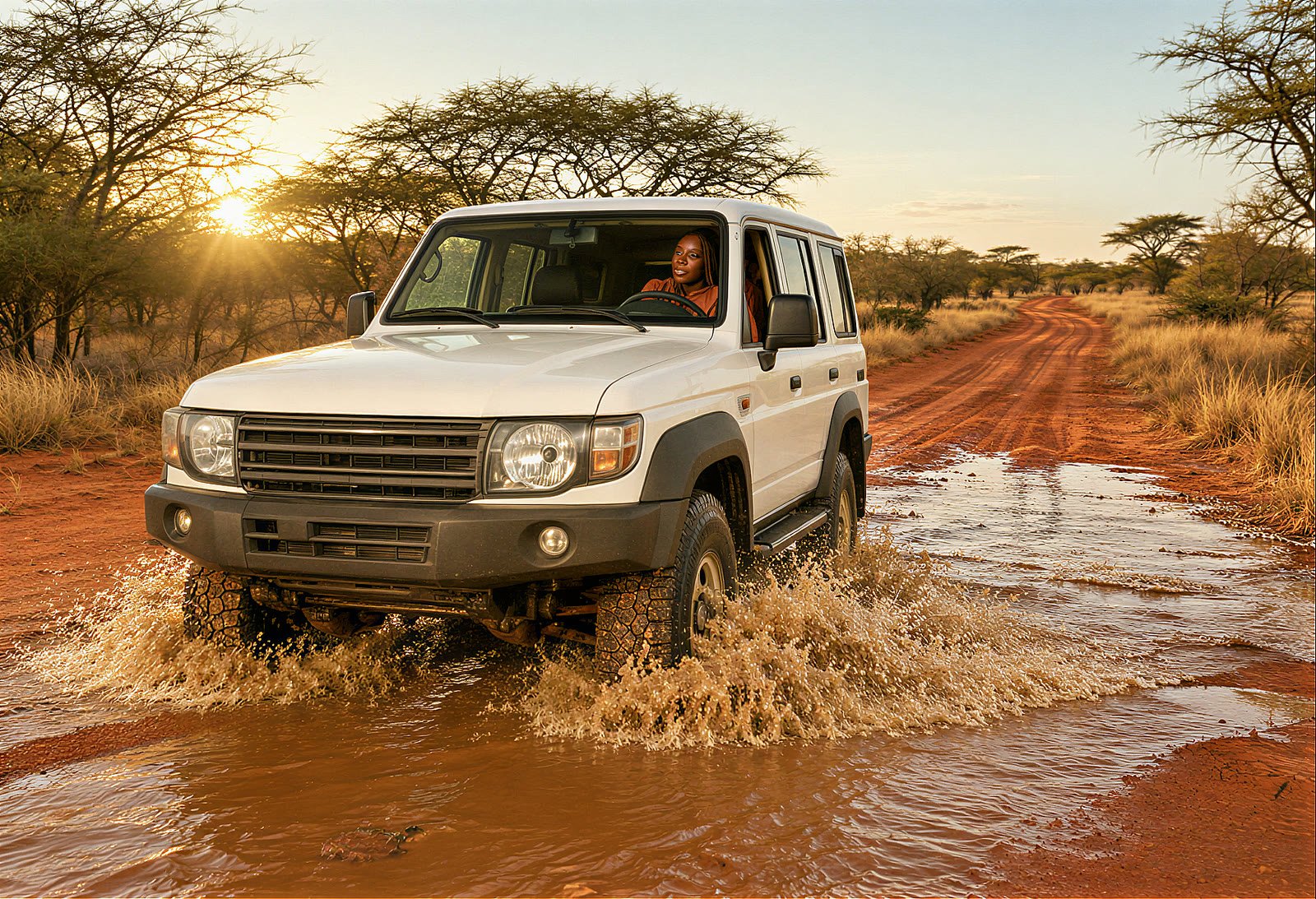
Fly to Tamale and drive 2.5–3 hours, or drive 10–12 hours from Accra. Flying wins on a short trip; driving wins on budget and stops.
Flying via Tamale
Passion Air and Africa World Airlines run daily Accra–Tamale flights of about one hour, according to an operator guide; confirm schedules and fares directly. Passion Air’s published allowance is 25 kg checked, with excess at GHS 12/kg; one-way fares are quoted at GHS 800–1,400. From Tamale, a private car takes 2.5–3 hours, a chartered taxi about 3 hours, and the bus about 6 hours.
Driving from Accra
The route is Accra–Kumasi–Kintampo–Damongo–park, about 730 km and 10–12 hours; another guide says 12–13. Drive in daylight, stop at Kumasi or Tamale, and use VIP coaches (GHS 300–450) or the STC Mole bus from Tamale (GHS 100, Sunday, Tuesday and Friday around 13:00).
The last leg to Damongo and the park gate
Tamale–Damongo–Larabanga gate; Larabanga is 3 km from Mole. The road is paved and a sedan is enough in dry season. The sources reviewed publish no gate hours or last-entry time, so plan to reach Damongo in daylight and confirm gate times at the Information Centre. The park states it takes no responsibility for visitors’ security outside its boundaries.
Do you need a 4×4?
No for the paved route in dry season; in June–August rain, some park roads can become impassable, so check conditions locally. Inside the park you cannot drive or walk without a guide.
| Option | Published time | Published cost | Best for |
|---|---|---|---|
| Fly Accra–Tamale, then private transfer | 1-hour flight plus 2.5–3-hour drive | Flight GHS 800–1,400 one way | Short trips and comfort |
| Private car from Tamale | 2.5–3 hours | — | Groups and flexibility |
| Shared bus or tro-tro | Bus about 6 hours Tamale–Mole | STC Mole bus GHS 100 | Tight budgets and patience |
| Drive from Accra | 10–12 hours | — | Road-trippers with time |
| Organised tour | 4 days (example package) | USD 720 per person | A no-planning trip |
Best time to visit Mole National Park: month-by-month weather and wildlife
The Forestry Commission and the 2017 Ecology and Evolution study define the dry season as November–March, while the World Parks Guide gives November–April; the core wildlife window is the dry months. December–February is cooler but hazy, March–April is very hot, and May–October is green, muddy and better for birds than sightings.
Dry season and harmattan
As waterholes shrink, elephants and antelope concentrate; the trade-off is dust, haze and 35–40°C heat in the hotter months. December is the coolest month at a mean 26°C, March the warmest at 31°C, and March–April can approach 40°C.
Source: Seasonal habitat use by Elephants (Loxodonta africana) in the Mole National Park of Ghana (Ecology and Evolution), 2017
Rainy season
More than 90% of the 1,100 mm annual rain falls April–October, with peaks in July and September. Grass can reach 3 m, animals disperse and some tracks close, but birding improves; an operator estimate says rooms can be 20–30% cheaper (Secure Travel and Tours guide, checked November 2026).
Month-by-month verdict
Verdicts are planning judgements based on the cited access, heat and crowding facts, not guarantees of sightings.
| Month | Conditions | Tracks | Wildlife | Crowds and price | Verdict |
|---|---|---|---|---|---|
| January | Dry, hazy, hot | — | Excellent at water | Peak post-Christmas, book ahead | Best for wildlife |
| February | Dry, hazy, hot | — | Excellent at water | — | Best |
| March | Hottest, near 40°C | — | Animals at remaining water | — | Good if you start at dawn |
| April | Rains begin | — | Green flush, dispersing | Cheaper | Fair |
| May | Rains build | — | Grass growing | — | Fair |
| June | Heaviest rains | Some roads impassable | Dispersed | Cheaper | Not for a first visit |
| July | Rain peak | — | Dispersed | — | Birding, not wildlife |
| August | Heavy rain | — | Dispersed | Cheaper | Not for wildlife |
| September | Rain peak | — | — | — | Fair |
| October | Rains end | Drying | Animals returning to water | — | Good late |
| November | Dry season starts | — | Waterholes shrink | — | Very good |
| December | Coolest, harmattan haze | — | Excellent | Operator estimate: peak season, book three months ahead (Secure Travel and Tours, checked November 2026) | Best for comfort and wildlife |
Where to stay: inside Mole, Damongo or Tamale
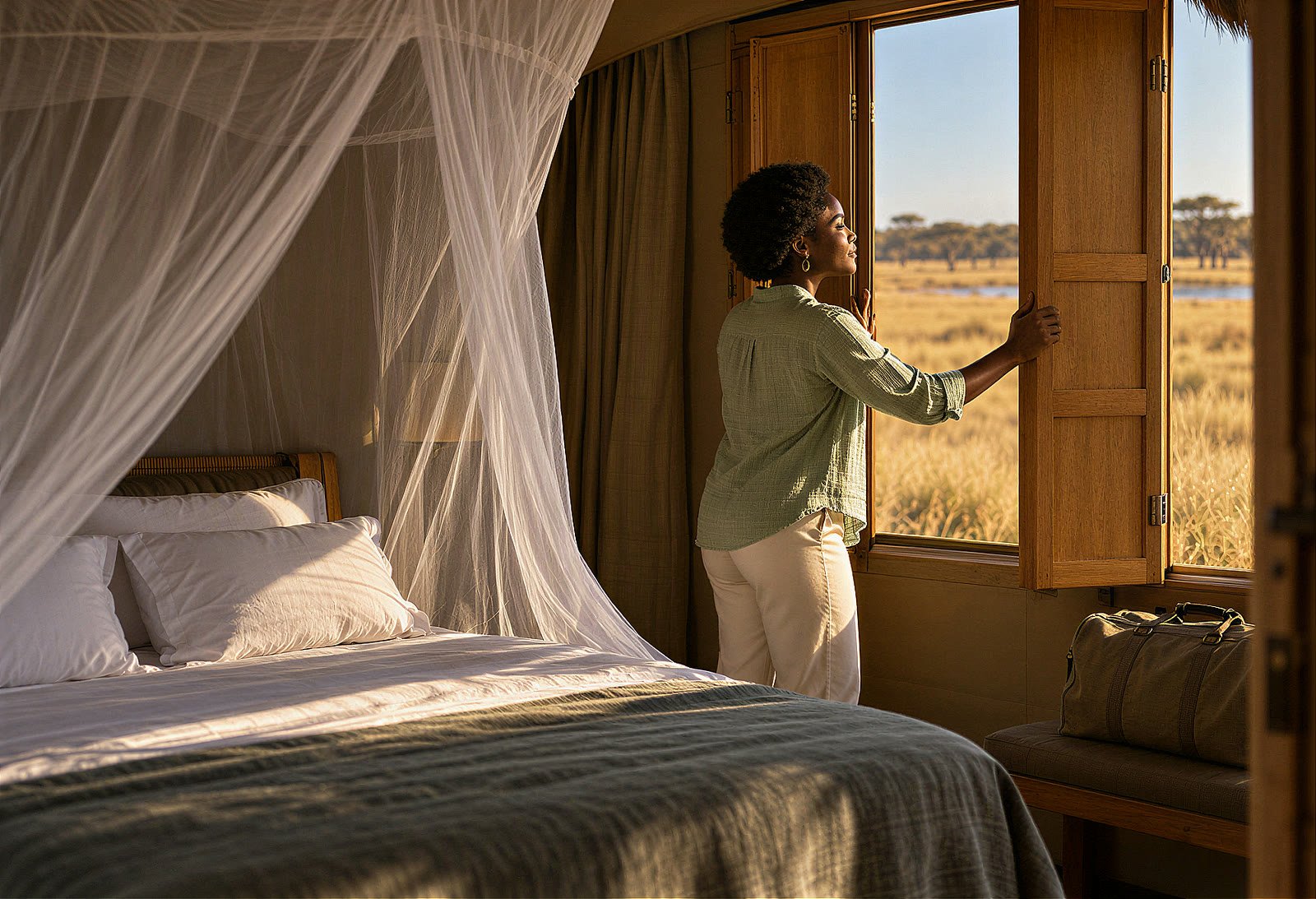
Sleep inside the park at Mole Motel or Zaina Lodge; Damongo is the cheap town base; Tamale is the airport base.
| Base | Options | Published rates | Trade-off |
|---|---|---|---|
| Inside the park | Mole Motel, Zaina Lodge | Mole Motel GHS 600–900 standard double (2026 operator listing); a November 2024 guide lists GHS 820 A/C, GHS 650 fan and GHS 1,150 chalet. Zaina USD 350–550 per person per night all-inclusive, or GHS 5,000–10,000 per room in November 2024 | Convenience and dawn access at a price |
| Damongo | Guesthouses | GHS 150–300 per night (operator estimate) | Cheapest, short transfer to the gate |
| Tamale | Airport base | No published rates in the sources | Airport access, 2.5–3-hour transfer |
The November 2024 Wikivoyage entry describes Mole Motel as having reliable power and water, erratic WiFi, a restaurant priced above northern norms and a cheaper staff canteen. Zaina is the luxury, all-inclusive option; one guide says its rates include game drives, so confirm.
Damongo is the Savannah regional capital and the closest town, with St Anne Hospital and a small Sunday market. Tamale has the airport but a 2.5–3-hour transfer.
- Room rate, meals, taxes and cancellation terms Confirm in writing
- Transfer from Tamale or Damongo included or not Ask
- Walking safari and game drive slots Reserve
- A/C or fan, mosquito net and power backup Check
- Cash for tips and gate extras Prepare
Mole National Park costs: entry fees, walking safaris and game drives
Entry is per person and activities are extra; a non-national adult pays GHS 60 on the 2025 tariff published on the park information site, checked November 2026. One operator’s 2026 listing separately quotes USD 10, and a walking safari is USD 7 per person. The publisher flags the tariff table as subject to change, and the gate is the final word on the day.
| Visitor | Ghanaian/national | Non-national |
|---|---|---|
| Adult | GHS 30 | GHS 60 |
| Tertiary student | GHS 15 | GHS 30 |
| Second-cycle student | GHS 10 | GHS 20 |
| Child/pupil | GHS 5 | GHS 15 |
Source: Updated 2025 Entrance Fees Mole National Park, 2025
Vehicle entry for foreign-registered cars is GHS 30, pick-up/4WD/station wagon GHS 50. Guide fees are GHS 10 per person per hour for Ghanaian adults and GHS 20 for non-national adults. One operator lists a camera fee of GHS 20 or USD 5, but the tariff table reviewed has no personal-camera line, so ask at the gate.
| Activity | Ghanaian | Non-national | Charged |
|---|---|---|---|
| Walking safari, armed ranger | GHS 50 | USD 7 | Per person |
| Sunrise walking safari | GHS 60 | USD 10 | Per person |
| Jeep safari, group | GHS 150 | USD 25 | Per person |
| Private jeep, 1–4 people | GHS 600 | USD 100 | Per vehicle |
| Night safari, when available | — | USD 35 | Per person |
| Birdwatching guide | — | USD 15 | Per guide |
| Larabanga Mosque visit | — | USD 5 | Per person |
Ask whether you are paying the guide fee, the activity fee, or both: the tariff table bills guides hourly, while the operator lists flat activity rates.
| Style | Two nights’ bed | Park entry | One activity | Still to add |
|---|---|---|---|---|
| Budget | Guesthouse GHS 150–300/night = GHS 300–600 | GHS 60 or USD 10 | Walking safari USD 7 | Meals, transfer, tips |
| Mid-range | Mole Motel GHS 600–900/night = GHS 1,200–1,800 | GHS 60 or USD 10 | Group jeep USD 25 | Meals, drinks, transfer |
| Comfort | Zaina USD 350–550 per person per night = USD 700–1,100 | USD 10 | Game drives included per one guide; confirm | Flights and transfers |
No exchange rate is assumed here because the sources publish in different currencies. Using the operator’s USD rates, one non-national adult pays at least USD 42 for entry, one walk and one group drive, before bed, food and transport. Carry cedi cash; you should ask for an official receipt.
What you will actually see and do: walking safaris, drives and Larabanga
Walking safari is the signature activity: an armed ranger, two hours, departures at 07:00 and 15:30, report 15 minutes early, closed shoes compulsory and rentable. The park lists foot-safari windows of 07:00–11:00 and 15:30–17:30.
Game drives use a park jeep or your own vehicle with a ranger; the motel platform overlooks a waterhole used morning and evening. Wildlife includes elephant, kob (commonest), waterbuck, roan, hartebeest, bushbuck, oribi, duikers, buffalo, warthog, baboons, monkeys, crocodiles and spotted hyena; 94 mammals and over 300 birds are recorded. Leopards are rarely seen; lions are not reliable.
Larabanga Mosque, 3 km from Mole, is Ghana’s oldest mosque and a Sudano-Sahelian building claimed to date from 1421. Visitors are not allowed inside per one guide; entry is GHS 20 or USD 5, and dress and photography rules should be confirmed locally. The Mystic Stone is beside the road, and Mognori village runs a short canoe trip with shea-butter demonstrations.
A three-day Mole itinerary with real travel times
Three days and two nights is the practical shape; the fly version saves the long road, the drive version adds stops.
If you fly
Day 1: morning Accra–Tamale flight (about 1 hour), then a 2.5–3-hour drive via Damongo. Check in at the Information Centre, then take the 15:30 walking safari or use the motel platform.
Day 2: 07:00 walking safari, rest through the heat, then an afternoon game drive at a time confirmed at the Information Centre.
Day 3: morning activity or Larabanga, then 2.5–3 hours back to Tamale for your flight; confirm the schedule. Keep a buffer.
If you drive
Day 1: Accra–Kumasi or Tamale, 10–12 hours; break at Kumasi or Kintampo.
Day 2: Tamale–Mole in 2.5–3 hours, then an afternoon safari.
Day 3: morning safari, Larabanga, return to Tamale. Add a night if you plan to drive back to Accra.
If you only have two days
Take one night, one walk and one drive; skip Larabanga and the second drive. You lose the cultural stop and the buffer.
The common mistake
Treating Mole as a day trip from Tamale leaves you hot, rushed and without a dawn walk. The transfer is 2.5–3 hours each way, safaris run at fixed times and the park requires a guide.
Safety, health and park rules: a calm practical checklist
Mole is a guided park and the main risks are heat, malaria, long drives and getting too close to elephants. Take malaria prophylaxis advice, repellent, long sleeves, water, sun protection and closed shoes.
Wildlife: never walk alone, keep 50 m from elephants and follow the ranger. Mole’s elephants are described as less aggressive than some populations, but they are still wild. Driving: daylight only, fuel up, avoid remote tracks after dark and carry cash. The park states it takes no responsibility for visitors’ security outside its boundaries.
St Anne Catholic Hospital in Damongo runs a 24/7 emergency line on +2335351212669; it is the nearest hospital and has 100 beds, but one welcome message notes staff and equipment shortages. Travel insurance with medical evacuation is sensible.
What to book before you fly to Mole National Park
Book flights, first and last nights, the in-park lodge and transfers before arrival. Guides are based at the Information Centre, and park activities are arranged there; some tours are listed online with free cancellation.
Car hire for the Accra–Mole road trip
If you are driving from Accra, Jaano offers Ghana car hire; confirm the vehicle suits the road and the number of passengers before you lock lodge dates.
Check visa or entry rules and the yellow fever certificate. A visa on arrival, where eligible, is applied for by a host or sponsor (a company, organisation or Ghanaian citizen) at GIS Headquarters, takes 3–5 working days, costs USD 200 for 30 days and requires the approval letter, passport, yellow fever certificate and return ticket. Complete the Ghana Health Declaration before travel.
A good outcome is two nights inside the park, one dawn walk, one late-afternoon drive, a Larabanga stop and a buffer before your flight. Next step: read the Ghana visa application walkthrough before you book flights.
Sources
- Mole National Park – Forestry Commission
- A Game Changer for Mole National Park – World Bank
- Seasonal habitat use by elephants in Mole National Park – Ecology and Evolution
- Updated 2025 Entrance Fees – Mole National Park
- Mole National Park security rules
- Mole National Park foot safari
- Mole National Park – Wikivoyage
- Mole National Park – World Parks Guide
- The Ultimate Guide to Mole National Park – Secure Travel and Tours
- Ghana records 98% reduction in malaria deaths – Ghana Health Service
- Savannah Region profile – Ghana Health Service
- How to Acquire a Visa on Arrival to Ghana – Ghana Immigration Service
- Fees and Charges – Ghana Immigration Service
- Fees & Charges – Passion Air
- St Anne Catholic Hospital, Damongo
- Larabanga Mosque – IMB
- Ghana Health Service
Frequently asked questions
Which region is Mole National Park in?
Mole National Park is in Ghana’s Savannah Region, near Damongo. The park’s own site sometimes uses the older Northern Region label, but the Savannah Region is the current administrative region.
Can you stay inside Mole National Park?
Yes. Mole Motel is at park headquarters on the escarpment, and Zaina Lodge is the luxury in-park option. Book direct, confirm current rates and check whether transfers and game drives are included.
Are there lions or leopards in Mole National Park?
The Forestry Commission lists lion, leopard and hyena as present, but leopards are rarely seen and one guide says lions are only rumoured, with the last recorded sighting in August 2004. Do not plan a trip around seeing either.
Do you need a 4×4 to reach Mole National Park?
Not for the paved Tamale–Damongo–Larabanga route in the dry season, where a sedan is enough. In the wet season, June–August rain can make some park tracks impassable, so higher clearance is sensible.
How many days should you spend in Mole National Park?
Two nights is the practical minimum, with one dawn walk and one game drive. Three days gives you time for Larabanga and a second activity without rushing the 2.5–3-hour transfer back to Tamale.