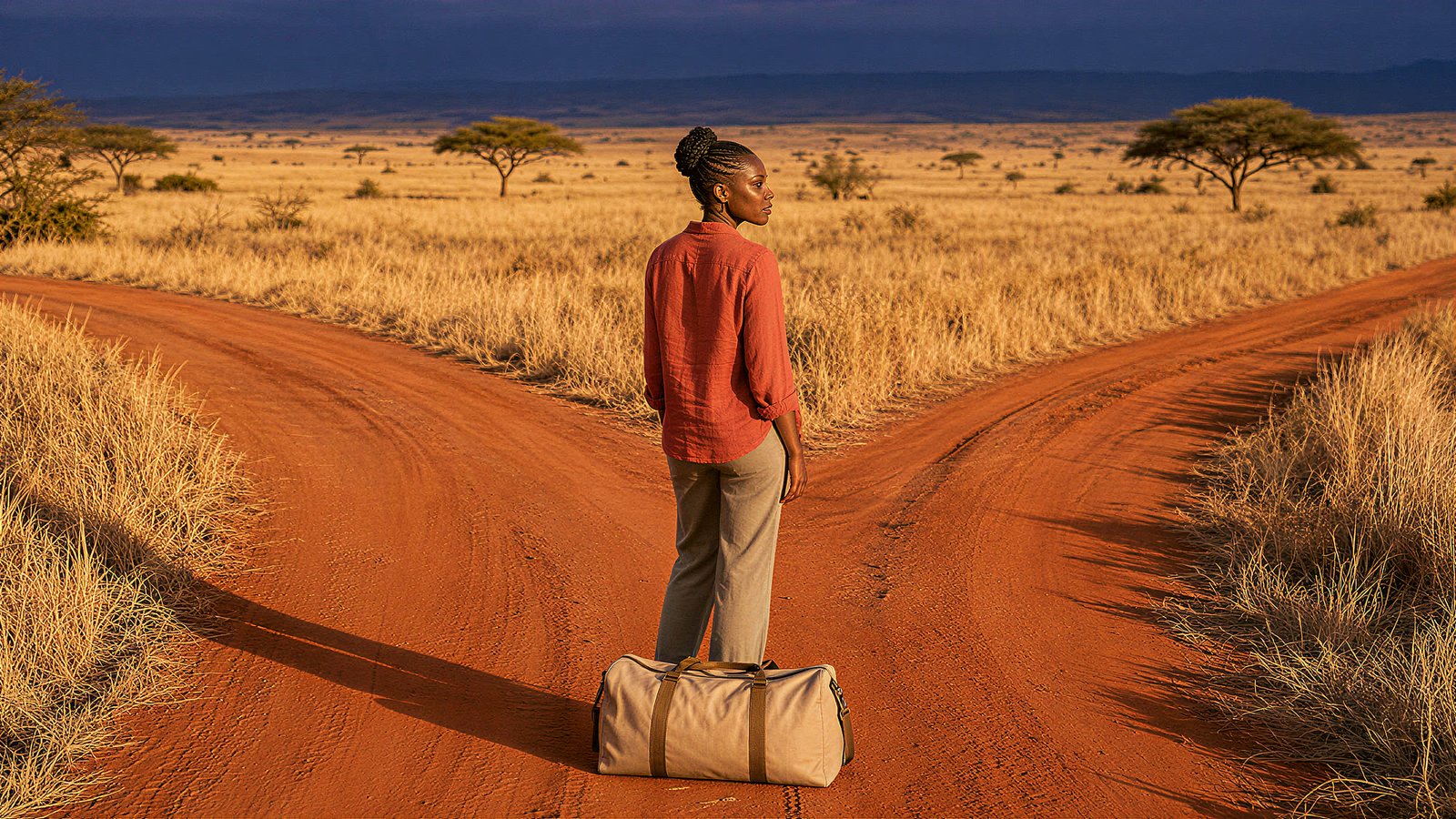
The planning shortlist for Africa used here groups Mauritius, Botswana, Rwanda and Namibia as easier first options, with Ghana, Morocco and Tanzania needing more planning — an editorial judgement rather than an official rating. The sources used here do not provide a single official table of the safest countries in Africa, and the indices used here were not built to tell you whether a beach week or a safari will run smoothly.
What decides a trip is narrower than a country label: the current advisory wording for the exact region you are visiting, the health rules you must meet before boarding, and the ordinary risks — roads, water, wildlife — that sit alongside the headline risks. The planning notes below follow those three themes, and the article ends with the list to recheck before you pay for anything.
Key takeaways
- Two official sources anchor the check: UK FCDO travel advice, published for 226 countries or territories, and the US State Department advisories that the CDC itself defers to.
- No index is a tourist safety rating. The 2026 Worldwide Governance Indicators are perception-based estimates intended for research and policy analysis, and the Global Peace Index ranks 163 states on 23 indicators of peacefulness, not of holiday experience.
- Country labels hide the risks that matter most: Ghana’s yellow fever outbreak sits in the Upper West Region, Rwanda’s cholera is localised to Western Province, and Western Sahara has its own FCDO page separate from Morocco.
- Health paperwork and road safety belong on every checklist — road crashes are the number one cause of death for healthy US citizens abroad.
- The FCDO states plainly that no travel can be guaranteed safe. Treat every entry below as a planning shortlist, not a promise.
Source: Foreign travel advice – GOV.UK, Checked November 2026
What ‘safe’ means for a traveller
Here, safe means a trip you can plan without a special security plan being the deciding factor: the advisory is not a blanket warning, the tourist route is well served, medical care is within reach and the daily risks are ordinary ones. It does not mean crime-free, and it does not mean an index score.
The three checks
- Official advice, to check before booking. The UK FCDO country page, which covers safety and security, entry requirements, health risks and legal differences, plus the US State Department advisory that the CDC directs travellers to for advisory levels.
- Governance and stability data, as context rather than a score. The World Bank’s 2026 Worldwide Governance Indicators cover six dimensions including political stability, rule of law and control of corruption; the 2026 Global Peace Index measures peacefulness across three domains.
- The practical picture. CDC health notices for the destination, road and transport conditions, distance to decent medical care, and how easy the country is to move around on a first trip.
Why one index is never enough
The Global Peace Index is published every June, and its 2026 edition records a decline in world peacefulness driven by conflict deaths. Neither it nor the governance indicators measure the thing most likely to injure a visitor: traffic. The governance figures are also perception-based estimates drawn from surveys and expert assessments, which the World Bank says are not definitive criteria.
The rule that keeps the list honest
A country should leave your shortlist when its advice carries a blanket warning, or a no-go region covering the places you actually want to see. A resort that feels calm does not rescue a route you cannot travel safely.
The sources used for this guide did not include fixed advisory levels, homicide rates or per-country index scores, so no country is given a safety score here — any number would be invented. Check the current figures on the official pages before booking.
The shortlist at a glance
This is the planning shortlist: seven countries plus one city. Read it by trip type as well as by rank, because the right country for a safari is not the right country for a beach week.
| Rank | Country | Best for | Main caveat to check |
|---|---|---|---|
| 1 | Mauritius | A low-friction beach trip | Sea conditions, seasonal weather, petty theft in tourist areas |
| 2 | Botswana | Low-density safari | Wildlife, remote roads, malaria advice for the north |
| 3 | Rwanda | Gorilla and primate trips | Malaria prevention, rabies cover, permit rules |
| 4 | Namibia | Self-drive touring | Long empty roads, wildlife |
| 5 | Ghana | A first West Africa trip and diaspora visits | Yellow fever in the Upper West Region; visa pre-approval |
| 6 | Morocco | Cities, mountains and desert | Medina scams, mountain and desert roads, Western Sahara |
| 7 | Tanzania and Zanzibar | Safari plus beach | Rainy seasons, marine safety, polio vaccination |
| City note | Cape Town, South Africa | A city break with wine and coast | Read the national advisory too |
Two things to hold in mind. The table is a shortlist, not a numerical score, and live advisories beat any article: if the FCDO page or the State Department advisory changes after you read this, the change wins.
The shortlist: seven countries for a first trip
Ranked from the easiest first trip to the one that needs the most planning. Each entry names the situation that would change the verdict.
1
Mauritius
A low-friction beach trip
Mauritius is the beach option on this shortlist. The caveats are ordinary: petty theft around tourist areas, sea conditions on boat trips, and road safety on coastal routes. The sources used here did not confirm Mauritius’s cyclone window, so check the seasonal advice for your month instead of assuming a dry-season rule.
2
Botswana
Low-density safari
Botswana is the low-density safari option, so the risk profile shifts from street crime to wildlife and distance. Okavango floodwaters arrive in the dry months, June to September. Confirm malaria advice for the delta and the north on the CDC destination page before booking.
3
Rwanda
Gorilla and primate trips
The park system runs through one official booking portal: permits are bought in advance and cash at the park is refused. Health needs proper planning — the CDC recommends malaria chemoprophylaxis for all travellers to Rwanda, notes rabies in dogs is common with post-exposure treatment potentially limited, and lists cholera in Western Province and schistosomiasis in fresh water. The 30% low-season permit discount runs November to May, with conditions, and a no-show makes the permit expire.
4
Namibia
Self-drive touring
Namibia suits travellers who want to drive themselves and stop when they like, and it works nearly year-round, with June to October best for wildlife at waterholes. The risks are the ones you manage yourself: long empty stretches and wildlife. Namibia also sits on the CDC’s circulating-poliovirus destination list, so check polio vaccination status before you commit.
5
Ghana
A first West Africa trip and diaspora visits
Ghana is the West Africa option on this shortlist for English-speaking visitors and for diaspora travellers. The health picture is regional — the CDC’s yellow fever notice covers the Upper West Region at Level 2, with vaccination at least 10 days before travel. Visa paperwork catches people out: the visa on arrival costs US $200 for 30 days, must be pre-approved by a host in Ghana and is issued only at Kotoka. Before fixing dates, check seasonal advice and the official Ghana visa rules.
6
Morocco
Cities, mountains and desert
Morocco’s advantage is timing: the shoulder seasons are March to May and September to November; plan cities, mountains and desert around those dates. The risks are everyday ones — medina pricing and scams, mountain and desert roads, and border areas that need their own advice. Western Sahara has a separate FCDO entry, so a desert extension south is a different check from Marrakech.
7
Tanzania and Zanzibar
Safari plus beach
Tanzania is the safari-plus-beach option on this list, and the CDC files Zanzibar inside Tanzania rather than as a separate destination, so one health page covers both. Seasons decide the plan: long rains March to May, short rains in November and December, and a long dry window from June to October, with the coast best from August to October and December to February. A key check is that Tanzania including Zanzibar is on the CDC’s circulating-poliovirus list.
Cape Town: a city-level exception, not a country-wide verdict
Cape Town is treated here as a city-level exception because the advisory is read area by area rather than as a national average. A good week in the Cape does not make everywhere in South Africa a good idea.
For current safety wording, check the FCDO South Africa page and the US State Department advisory before booking. Cape Town’s dry window is November to March — the opposite of Kruger’s May to September safari peak — so a two-stop South Africa trip needs its dates split. Check times and costs by area before you go.
Where ‘safe country’ advice breaks down
Capital city versus region
Country pages are usually written around the capital and the main tourist route, with regional warnings underneath. Read the map section, not only the headline level, and check the date on the page.
Border areas and no-go zones
Some places should never be flattened into a country verdict: Western Sahara has its own FCDO entry, separate from Morocco. Check current FCDO wording for it rather than trusting a country summary. The same principle shows up in health data — the CDC’s ‘avoid all travel’ notice covers only two eastern DRC provinces, Ituri and Nord-Kivu, not the whole country.
Elections and protest risk
An election, a curfew or a protest can change the picture within days, so the date on the page matters as much as the level. Note when you checked, then check again the week you fly. The FCDO also tells travellers to read the advice for every country they transit through, not just the destination.
Resort versus route
A resort can be calm while the road to it is the actual risk. Judge the whole itinerary — arrival time, transfer length, who is driving, and what happens after dark.
The everyday risks that catch travellers more often than crime

Road safety
Road crashes are the number one cause of death for healthy US citizens abroad, which is a better reason to skip night driving than any advisory. Avoid unlicensed motorbikes, avoid overloaded minibuses where you have a choice, and agree the fare or use an app before you get in.
For self-drive in East Africa, carry a valid licence, insurance sticker and the vehicle log book. A car not registered in the host state needs a $20 temporary road licence per month after a seven-day grace period, and can stay a maximum of six months.
Health and insurance
Start with the baseline: a global measles notice lists Ghana, Mauritius, Morocco, Namibia, Botswana, Rwanda, Tanzania including Zanzibar and South Africa, and advises full vaccination for all international travellers. Yellow fever vaccination needs at least 10 days before travel and the certificate is valid for life now the booster requirement is gone; carry the certificate or a medical waiver, and check the rule against your full route, not just the destination.
Other lead times set your calendar: 21 days for the rabies pre-exposure series, two weeks for injectable typhoid, and a two-dose hepatitis A course — which is why a travel doctor a month out is the practical deadline. Malaria advice is itinerary-specific: 83 countries were malaria-endemic in 2024, the CDC weighs city, accommodation, season and travel style, and surveillance data is incomplete by design, so maps are estimates. Rwanda is a chemoprophylaxis destination for all travellers, and a repellent with at least 20% DEET is the useful default.
Buy medical evacuation cover, and bring your own medicines: prescription drugs legal at home may be illegal abroad, and medicines bought abroad may be substandard.
Petty crime and scams
Use the hotel safe, split cards and cash across bags, and treat unsolicited help at stations and taxi ranks as a sales pitch. Agree fares first or use an app.
Wildlife and water
Swim only in designated areas and follow lifeguards and flags, and stay out of fresh water where sanitation is poor — schistosomiasis is present in lakes, ponds and rivers in countries including Rwanda. On safari, do not touch or feed animals, which covers dogs and livestock as well as game. Heat is its own hazard: heat stroke can be fatal, so pace activity and drink water.
How to choose the safest country for your trip type
First solo trip. For a first solo trip, pick by what you want from the days, not by rank: Mauritius for a beach trip, Rwanda for primates and Ghana for heritage.
Family or diaspora visit. Ghana and Mauritius are the family or diaspora options on this shortlist; check medical facilities near your base.
Safari. Botswana and Tanzania are the safari options on this shortlist, Namibia the self-drive option. Match the style of trip to your tolerance for remoteness.
Beach and island. Mauritius and Zanzibar, timed around the rains and with marine safety in mind.
Heritage and cities. Ghana for heritage and Accra, Morocco for medinas and desert — both reward a fixed itinerary rather than daily improvisation.
What to check before you book

Recheck the FCDO page and the State Department advisory for every country and transit point in the same week you book, then confirm entry rules on the government site rather than a blog. For Ghana that means pre-approval for a visa on arrival (US $200, 30 days) or an eVisa, plus the Health Declaration E-Form every traveller completes. Ghana also waived visa fees for African nationals from 25 May 2026, and ECOWAS citizens are exempt, so confirm before paying an agent.
- US and UK advisory pages for each country and transit point, with the date checked Confirm
- Visa or eVisa rules on the official government or immigration site Confirm
- Yellow fever certificate or waiver, booked at least 10 days ahead Confirm
- Malaria prescription, routine vaccines and polio status, a month out Confirm
- Insurance covering medical evacuation and your planned activities Confirm
- First and last night’s accommodation, booked before flights Confirm
The short answer for most first-time visitors
For the lowest-friction first trip, pick Mauritius; for a first safari, Botswana; for primates, Rwanda; and if West Africa and heritage are the point, Ghana. Morocco suits cities and desert, while Tanzania and Zanzibar give you safari plus beach in one itinerary.
No country on this list is risk-free, and the itinerary, the transport and your own routines matter more than the country label. Shortlist two countries from this ranking, then match them to your dates and season.
Sources
- UK FCDO: Foreign travel advice
- UK FCDO: Federated States of Micronesia travel advice
- US Department of State: Travel Advisories
- CDC: Travel Health Notices
- CDC: Destinations list
- CDC: Rwanda traveler view
- CDC: United Arab Emirates traveler view
- CDC Yellow Book: Yellow fever vaccine and malaria prevention information, by country
- CDC: Think Travel Vaccine Guide
- World Bank: Worldwide Governance Indicators
- Institute for Economics & Peace: Global Peace Index
- East African Community: Travelling in East Africa
- Ghana Immigration Service: How to Acquire a Visa on Arrival to Ghana
- Ghana Immigration Service: Visas
- Fragomen: Ghana visa fee waiver for African passport holders implemented
- VisaHQ: Ghana visa requirements
- Ghana Visa for U.S. Citizens: Fees & Requirements 2026
- Rwanda Development Board: Low season discount
- Expert Africa: The best time to go to Tanzania
- Chalo Africa: Best Time to Visit Tanzania
- Adventure Life: Best Time to Visit Africa – A Month-by-Month Guide
Frequently asked questions
Which country in Africa is the safest for tourists?
On the criteria used here, Mauritius is the beach option for a first trip, Botswana for safari and Rwanda for primate trips. All three still need a live check of the UK FCDO page and the US State Department advisory, so confirm the current wording before booking.
Is Ghana safe for diaspora visitors and first-timers?
Ghana is the most practical first stop in West Africa for English-speaking and diaspora travellers. The health risk is regional: the CDC’s yellow fever notice covers the Upper West Region, with vaccination at least 10 days before travel. Visa on arrival costs US $200 for 30 days, must be pre-approved before you fly and is issued only at Kotoka.
Is Cape Town safe for tourists?
Cape Town’s dry window is November to March, the opposite of Kruger’s May to September safari peak, so a two-stop South Africa trip needs its dates split. Check the FCDO South Africa page and the US State Department advisory for current safety wording before booking.
How safe is Namibia for a self-drive trip?
Namibia suits self-drive travellers and works nearly year-round, with June to October best for wildlife at waterholes. Plan around long empty roads and wildlife, and note that Namibia appears on the CDC’s circulating-poliovirus destination list, so check your polio vaccination status.
Do I need a yellow fever certificate for these countries?
It depends on your route. Yellow fever vaccination should be given at least 10 days before travel, the certificate is now valid for life, and rules can hinge on countries you transited as well as your destination. Ghana lists a yellow fever certificate as mandatory for its visa on arrival, while the CDC says Rwanda does not require proof for direct arrivals from the United States.